Protein is one of the most important nutrients for your body — but how much do you actually need?
Your ideal protein intake depends on much more than a single universal recommendation. Your body weight, activity level, training routine, age and personal goals can all influence how much protein may be appropriate for you.
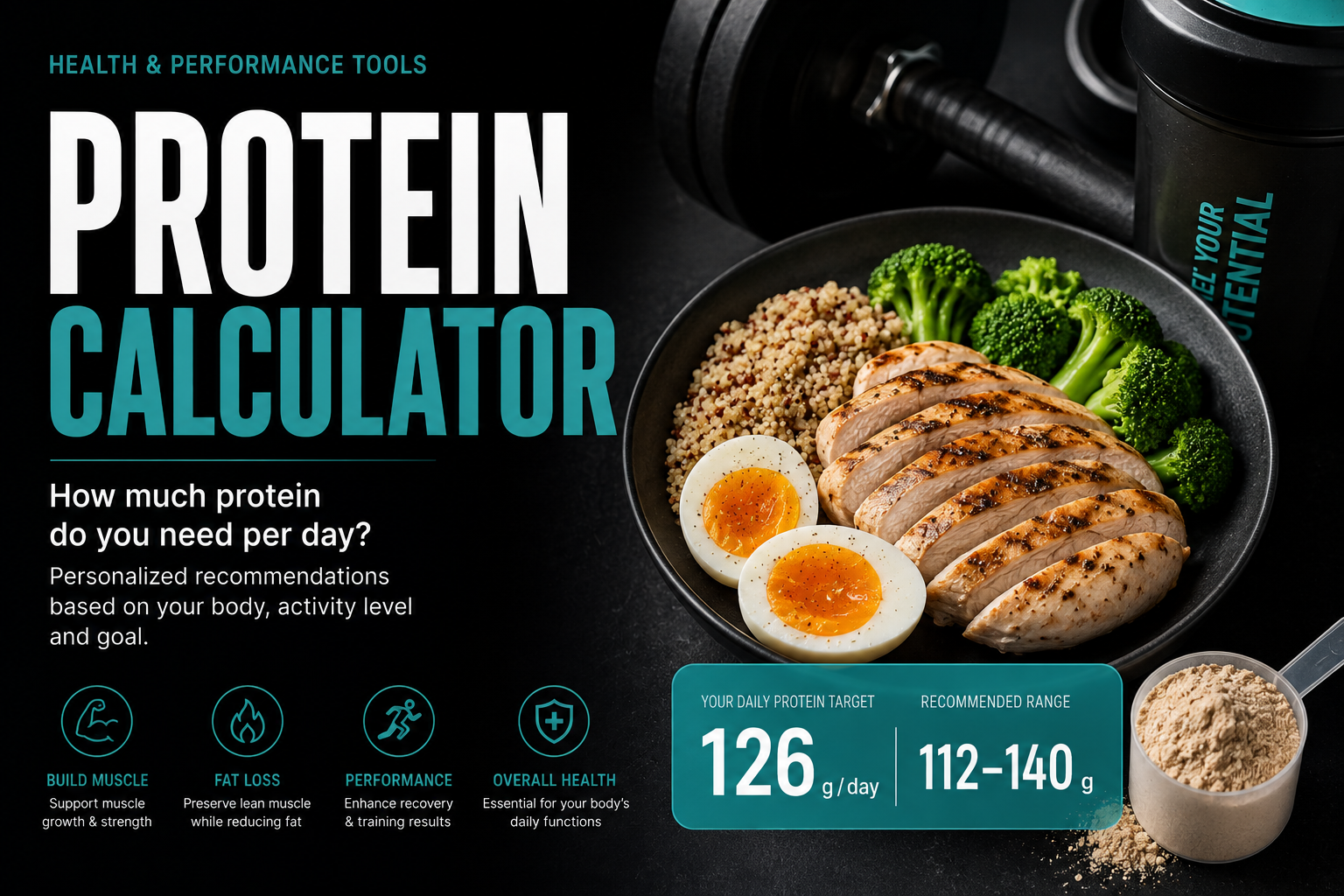
The VYVE lab Protein Calculator helps you estimate your daily protein needs based on your individual profile and goal.
Whether you want to support general health, lose fat, build muscle or improve recovery from an active lifestyle, use the calculator above to find a practical daily protein target.
How Much Protein Do I Need Per Day?
There is no single protein target that is ideal for everyone.
Protein requirements can vary considerably between someone with a sedentary lifestyle and someone who trains several times per week.
Your needs may also change depending on your goal.
For example, someone trying to maintain or build muscle may benefit from a higher protein intake than someone who is relatively inactive.
Instead of giving everyone the same recommendation, our Protein Calculator estimates your intake relative to your body weight, activity level and goal.
Your result includes:
- Estimated daily protein target
- Recommended protein range
- Protein intake per kilogram of body weight
- Estimated protein per meal
Think of these numbers as a practical starting point rather than a rigid daily requirement.
Why Is Protein Important?
Protein is much more than a nutrient associated with bodybuilding.
Your body uses protein to provide amino acids — the building blocks involved in numerous structures and processes throughout the body.
Protein contributes to the growth and maintenance of muscle mass and the maintenance of normal bones.
For physically active people, getting enough protein is particularly relevant because exercise increases the importance of recovery and muscle maintenance.
Protein can therefore be an important part of nutrition strategies focused on performance, body composition and healthy ageing.
Protein Calculator
Calculate your recommended daily protein intake based on your body weight, activity level and personal goal.
Estimated daily protein intake based on your body weight, activity level and selected goal.
Protein provides essential amino acids your body uses to build and maintain muscle, support recovery and perform many important physiological functions.
This calculator provides an estimated protein target for educational purposes only. Individual needs may vary depending on body composition, training volume, health status, pregnancy, age and other factors.
How Much Protein Do You Need for Muscle Gain?
If your goal is building muscle, resistance training provides the stimulus — while adequate nutrition provides your body with the resources needed to respond.
Protein is a key part of that equation.
Research on resistance-trained individuals generally suggests that protein requirements are higher than the basic recommendations designed for sedentary populations.
For many active adults, an intake somewhere around 1.6–2.2 grams of protein per kilogram of body weight per day is commonly used as a practical range when the goal is supporting muscle growth.
For a person weighing 80 kg, that could represent approximately:
128–176 g of protein per day.
However, consuming more protein does not automatically mean more muscle.
Your overall calorie intake, training quality, recovery, sleep and consistency remain extremely important.
How Much Protein Do You Need for Fat Loss?
Protein can become especially important during a calorie deficit.
When you’re consuming fewer calories than your body uses, maintaining adequate protein intake — particularly alongside resistance training — can help support the maintenance of lean muscle mass.
Protein-rich foods can also contribute to satiety, which may make a calorie-controlled diet easier to follow.
For people who are physically active and trying to reduce body fat while maintaining muscle, protein intake is therefore often set higher than basic population recommendations.
The ideal amount still depends on factors such as body weight, body composition, training volume and the size of your calorie deficit.
Protein for an Active Lifestyle
You don’t have to be a bodybuilder to benefit from paying attention to protein.
Running, cycling, CrossFit, team sports, hiking and other demanding activities all increase the importance of recovery and appropriate nutrition.
Endurance athletes typically don’t require exactly the same protein intake as strength athletes, but their requirements may still be higher than those of sedentary individuals.
Protein can be particularly valuable alongside sufficient carbohydrates, total calories, hydration and micronutrients as part of a complete performance nutrition strategy.
Does Age Affect Protein Requirements?
Protein becomes increasingly important as we age.
Ageing is associated with gradual changes in muscle mass and the body’s response to dietary protein.
Maintaining an active lifestyle — particularly resistance exercise — together with adequate protein intake can therefore become increasingly relevant later in life.
Rather than focusing only on the total daily amount, distributing protein across several meals can also be a practical strategy.
How Much Protein Should You Eat Per Meal?
You don’t need to consume your entire daily protein target in one or two meals.
Spreading protein throughout the day makes it easier to reach your target and provides your body with regular sources of amino acids.
For example, if your daily target is:
120 g protein
you could divide it across four meals:
30 g + 30 g + 30 g + 30 g
If your target is:
160 g protein
four meals containing approximately 40 g each would reach the same daily total.
Your meals don’t have to contain exactly the same amount. Think of this as a simple framework rather than a strict rule.
What Foods Are High in Protein?
Protein can come from both animal and plant-based foods.
Common high-protein foods include:
- Chicken and turkey
- Fish and seafood
- Eggs
- Greek yogurt and skyr
- Cottage cheese
- Lean beef
- Tofu and tempeh
- Lentils
- Beans and chickpeas
- Seitan
- Protein-rich dairy products
Protein powders can also provide a convenient way to increase protein intake when reaching your target through regular meals is difficult.
However, supplements should complement a balanced diet rather than replace nutritious whole foods.
Do You Need Protein Powder?
No.
It is entirely possible to meet your protein requirements through food.
Protein powder is primarily about convenience.
A shake can provide an easy source of protein after training, during a busy workday or whenever preparing a complete protein-rich meal isn’t practical.
The important factor is your overall daily protein intake — not whether that protein comes from a shake or a chicken breast.
When Is the Best Time to Eat Protein?
The total amount of protein you consume throughout the day is generally more important than obsessing over the exact minute you consume it.
You don’t necessarily need to drink a protein shake immediately after your final repetition at the gym.
Instead, focus on consuming enough protein throughout the day and distributing it reasonably across your meals.
Having a protein-containing meal around your training session can still be a convenient way to support your overall nutrition and recovery strategy.
Can You Eat Too Much Protein?
More isn’t always better.
Once you’re consuming enough protein to support your goals, dramatically increasing your intake may provide little additional benefit while taking calories away from carbohydrates, fats and other nutrient-rich foods.
Your diet still needs balance.
People with certain medical conditions — particularly conditions affecting kidney function — should discuss appropriate protein intake with a qualified healthcare professional rather than relying on a general online calculator.
Frequently Asked Questions
How do I calculate how much protein I need?
A simple approach is to calculate protein relative to body weight in kilograms. The appropriate number of grams per kilogram depends on factors such as activity level, training and your goal.
The VYVE lab Protein Calculator does this automatically based on the information you provide.
Is 100 grams of protein a day enough?
It depends.
For a smaller or moderately active person, 100 g may be sufficient. For a larger person performing frequent resistance training, it may be below their preferred target.
Protein requirements make more sense when considered relative to body weight rather than as one universal number.
Is 2 grams of protein per kg too much?
For many healthy, physically active adults, approximately 2 g/kg can fall within commonly used sports-nutrition ranges.
However, higher intake is not automatically better and individual requirements vary.
How much protein do I need to build muscle?
For people performing regular resistance training, approximately 1.6–2.2 g/kg/day is commonly used as a practical range.
Training quality, adequate energy intake and recovery are also essential for muscle growth.
How much protein do I need to lose weight?
Protein requirements during fat loss depend on your body weight, activity level, body composition and calorie deficit.
Higher protein intake is commonly used during fat-loss phases to help support muscle maintenance and satiety.
Should I eat protein every day?
Yes. Your body needs dietary protein regularly, including on rest days.
Recovery and adaptation don’t only happen while you’re exercising.
Is plant protein as good as animal protein?
Both can contribute effectively to your daily protein intake.
Plant-based diets may benefit from consuming a variety of protein sources throughout the day to provide a broad range of essential amino acids.
Calculate Your Daily Protein Needs
You don’t need to guess how much protein to eat.
Enter your body weight, activity level and goal into the VYVE lab Protein Calculator to estimate your personalized daily target.
Use the result as a starting point, build your meals around high-quality protein sources and adjust your nutrition according to your progress, performance and lifestyle.
Calculate your daily protein target above and start building a nutrition strategy that works for you.
The VYVE lab Protein Calculator provides estimates for educational and informational purposes only. Individual nutritional requirements vary. The calculator is not intended to diagnose, treat or prevent any medical condition and does not replace personalized advice from a qualified healthcare or nutrition professional.
Share this:
- Email a link to a friend (Opens in new window) Email
- Share on Facebook (Opens in new window) Facebook
- Share on LinkedIn (Opens in new window) LinkedIn
- Share on WhatsApp (Opens in new window) WhatsApp
- Share on Threads (Opens in new window) Threads
- Share on X (Opens in new window) X
- Share on Pinterest (Opens in new window) Pinterest